Dr. Rachel Faber Becomes Board Certified by the American Board of Orthopaedic Surgery
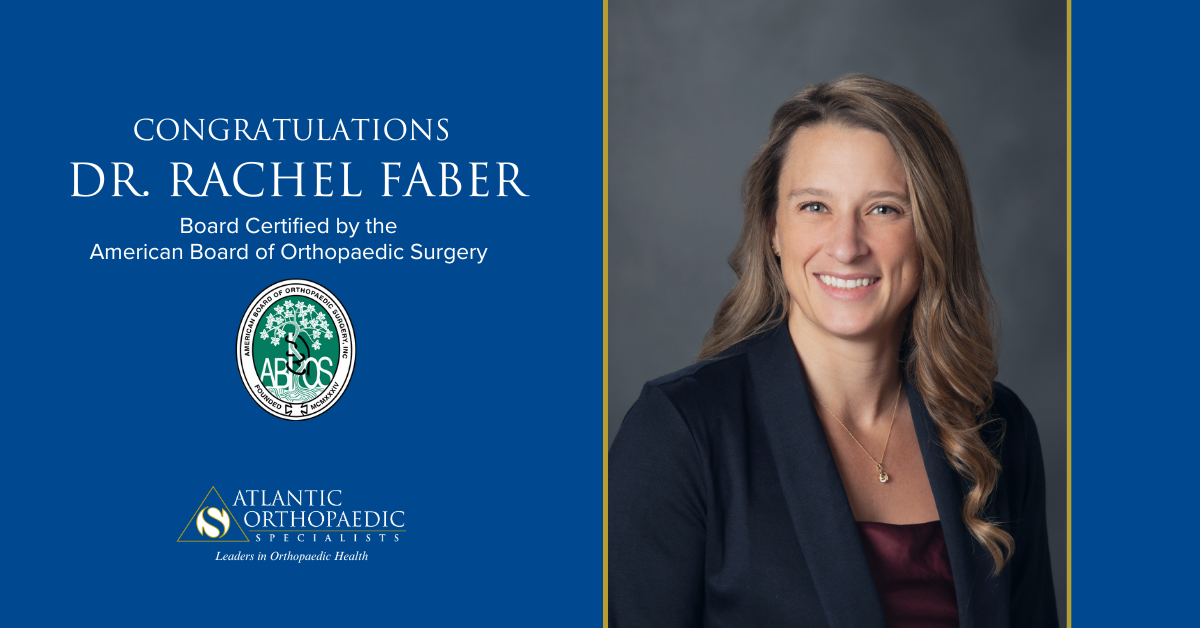
Atlantic Orthopaedic Specialists proudly congratulates Dr. Rachel Faber, MD, FAAOS, on achieving Board Certification through the American Board of Orthopaedic Surgery (ABOS). This significant professional milestone represents advanced expertise, rigorous training, and a commitment to exceptional patient care.
Board Certification is a voluntary credential that goes beyond a surgeon’s medical license. It sets physicians apart as recognized specialists in the eyes of patients, hospitals, and the medical community. Achieving this distinction reflects both mastery of orthopaedic knowledge and dedication to continuous learning.
What It Means to Be a Board-Certified Orthopaedic Surgeon
Board Certification is one of the highest recognitions an orthopedic surgeon can earn. It confirms that a surgeon has met nationally established standards for clinical excellence, surgical skill, and ethical practice.
For patients, Board Certification provides reassurance that their surgeon has been thoroughly evaluated by peers and has demonstrated excellent judgment, strong technical ability, and a deep commitment to the highest quality of care in orthopaedic surgery.
There are more than 30,000 ABOS Board Certified Orthopaedic Surgeons in the United States. Dr. Faber now joins this respected group of specialists.
The Path to ABOS Board Certification
Medical Education and Orthopaedic Residency
To begin the certification process, a surgeon must graduate from an accredited four-year medical school and complete a five-year accredited orthopaedic surgery residency program in the United States or Canada. The final two years of residency training must be completed within a single program. During this time, surgeons gain extensive hands-on experience treating conditions of the bones, joints, muscles, ligaments, and tendons.
Part I: The Computer-Based Written Examination
After residency, surgeons may apply to take Part I, an eight-hour, computer-based examination administered at Prometric testing centers. This exam includes approximately 320 multiple-choice questions that cover the full scope of orthopaedic surgery. Passing Part I designates a surgeon as Board Eligible. Surgeons then have a five-year window to complete Part II.
Part II: The Oral Examination
To be admitted to the ABOS Oral Examination, a candidate must hold a full and unrestricted medical license and have been in active practice for at least 17 months. The ABOS also conducts peer review through orthopedic colleagues and hospital leadership to evaluate the surgeon’s professionalism, judgment, and quality of care.
Once admitted, the surgeon submits a full six-month case log of every surgical procedure performed during that period. The ABOS reviews the case list and selects 12 representative cases for further evaluation. Surgeons must then provide detailed documentation, including clinic notes, operative reports, imaging studies, and postoperative outcomes.
The Oral Examination is held annually in Chicago. During the exam, candidates present their 12 cases to board-certified examiners who independently assess decision-making, diagnostic interpretation, treatment planning, technical skill, and management of complications. Exam performance is evaluated with great care to ensure each surgeon meets the high standards expected by the ABOS.
Final Credentialing
Surgeons who pass both Part I and Part II earn ABOS Board Certification and become Diplomates of the American Board of Orthopaedic Surgery for a ten-year period. This accomplishment reflects deep professional dedication and a commitment to providing patients with the highest level of orthopaedic care.
Dr. Faber’s Perspective on the Certification Journey
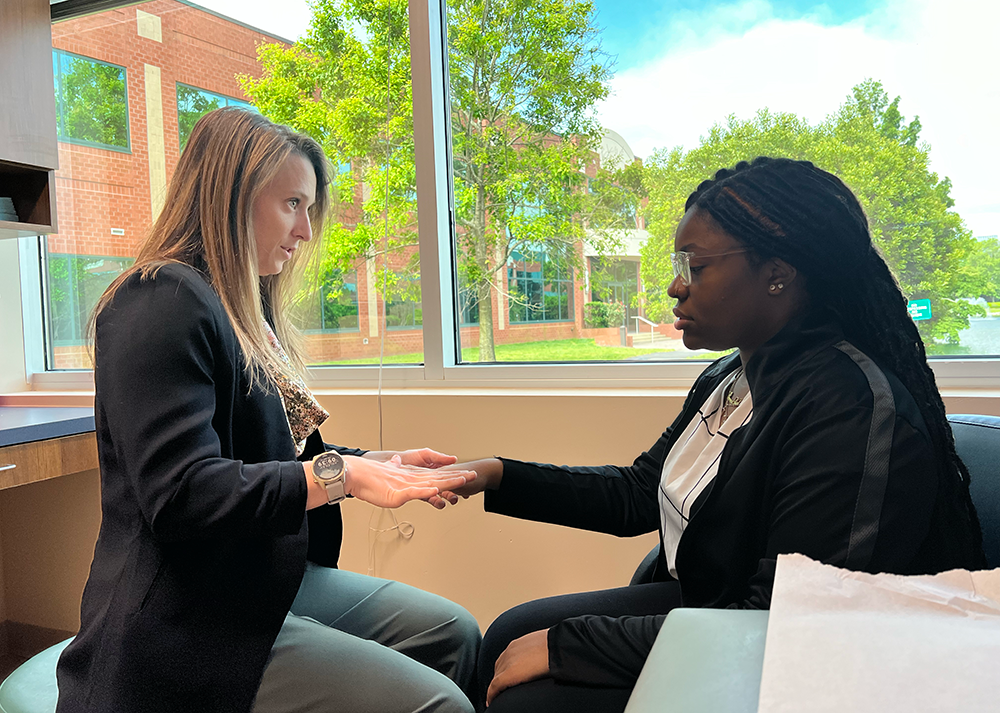
Dr. Faber shared insight into her own certification experience. After passing the written exam at the completion of residency, she began the two-year process of preparing for the oral examination. This involved submitting a complete case log, responding to requests for additional documentation, and presenting her selected cases to a panel of board-certified orthopedic surgeons.
Her successful completion of both components highlights her strong clinical judgment, meticulous attention to detail, and dedication to excellence in hand and upper extremity surgery.
Why Board Certification Matters for Patients
Advanced Knowledge and Skill
Board-certified surgeons possess advanced expertise in diagnosing and treating complex musculoskeletal conditions. This is especially meaningful in specialized areas such as hand and upper extremity care.
Commitment to Quality
Certification confirms that a surgeon meets high standards for patient safety, ethical practice, and surgical excellence.
Ongoing Professional Development
Board Certification must be renewed. This ensures that surgeons remain current with evolving techniques, research, and best practices.
Increased Patient Confidence
For patients and families, Board Certification provides confidence in a surgeon’s qualifications and dedication to the best possible outcomes.
About Dr. Rachel Faber
Dr. Faber is a fellowship-trained Hand and Upper Extremity Surgeon who is passionate about helping patients regain function and improve quality of life. Her expertise includes the treatment of hand, wrist, and elbow injuries, nerve disorders, fractures, and conditions that affect the upper extremity. Her achievement in earning ABOS Board Certification further demonstrates her commitment to delivering exceptional, patient-centered care.
Congratulations, Dr. Faber
Atlantic Orthopaedic Specialists is honored to celebrate Dr. Faber’s accomplishment. Her dedication reinforces our mission to provide outstanding orthopaedic care to patients throughout Hampton Roads and beyond.